
Section 1: Divine Beginnings — Janak’s Plough and Sita’s Birth
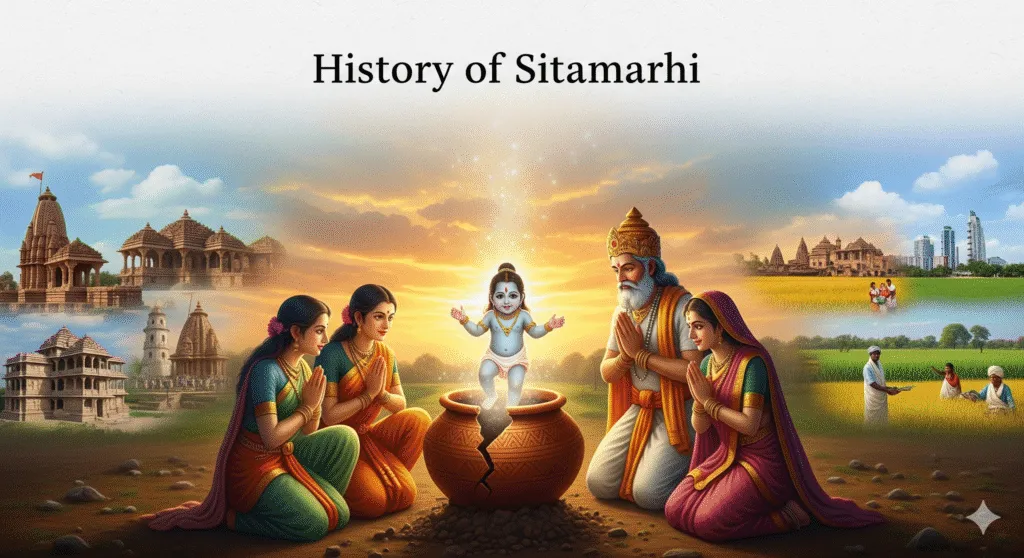
The story of Sitamarhi begins not with a king’s decree, but with a farmer’s humble toil. In the ancient land of Videha, a kingdom ruled by the wise and spiritual King Janak, a prolonged drought had brought his people to their knees. Following the counsel of his sages, Janak took up a plough and began to till the earth himself, a symbolic act of reverence and plea to the gods. As the plough’s iron tip, known as a ‘sita,’ cut through the soil, it struck something hard and unyielding. With a gentle push, a small, golden urn emerged, and from it, a luminous baby girl. This miraculous birth, believed to have occurred at Punaura Dham pilgrimage, a site now revered by millions, marked the arrival of Goddess Sita.
The symbolism of this event runs deep. The name Sitamarhi itself means “the place of Sita’s urn” (Marhi). It signifies not just a birthplace, but the spiritual core of a culture founded on fertility, dharma, and divine femininity. Today, the revered Janaki Temple Sitamarhi stands as the focal point of devotion, drawing pilgrims who come to connect with this sacred origin story. The temple’s architecture, a blend of traditional and modern styles, resonates with the spiritual magnetism of the place. Just a few kilometers away, Haleshwar Sthan is believed to be the spot where King Janak performed the yagna before the ploughing, further cementing the region’s connection to the epic.
Section 2: Ramayana in Bihar — Sitamarhi’s Role in the Epic
Sitamarhi’s role in the epic of the Ramayana in Bihar is far more than just a footnote; it is the genesis of the entire narrative. This is where Sita spent her childhood, where she learned the values of compassion and strength, and where her divine journey began. The town is the spiritual anchor from which she embarked on her journey to Ayodhya to marry Lord Rama, her husband and the embodiment of ideal manhood.
The spiritual rhythm of the town is most palpable during Ram Navami Sitamarhi and Janaki Navami rituals. These festivals are not just religious events; they are a celebration of community, cultural pride, and devotion. Thousands gather at the Janaki Temple Sitamarhi for a spectacle of hymns, prayers, and vibrant processions. The air hums with devotional songs, and the people, regardless of their social standing, become one in their shared reverence. The annual Sitamarhi Dham Parikrama, a spiritual walk around the sacred sites, is a testament to the community’s dedication to heritage preservation and spiritual tourism. It’s a journey that traces the mythological geography of Sita’s life, allowing devotees to experience the epic in a profound, personal way.
Section 3: Cultural Continuity — Bajjika Culture Revival
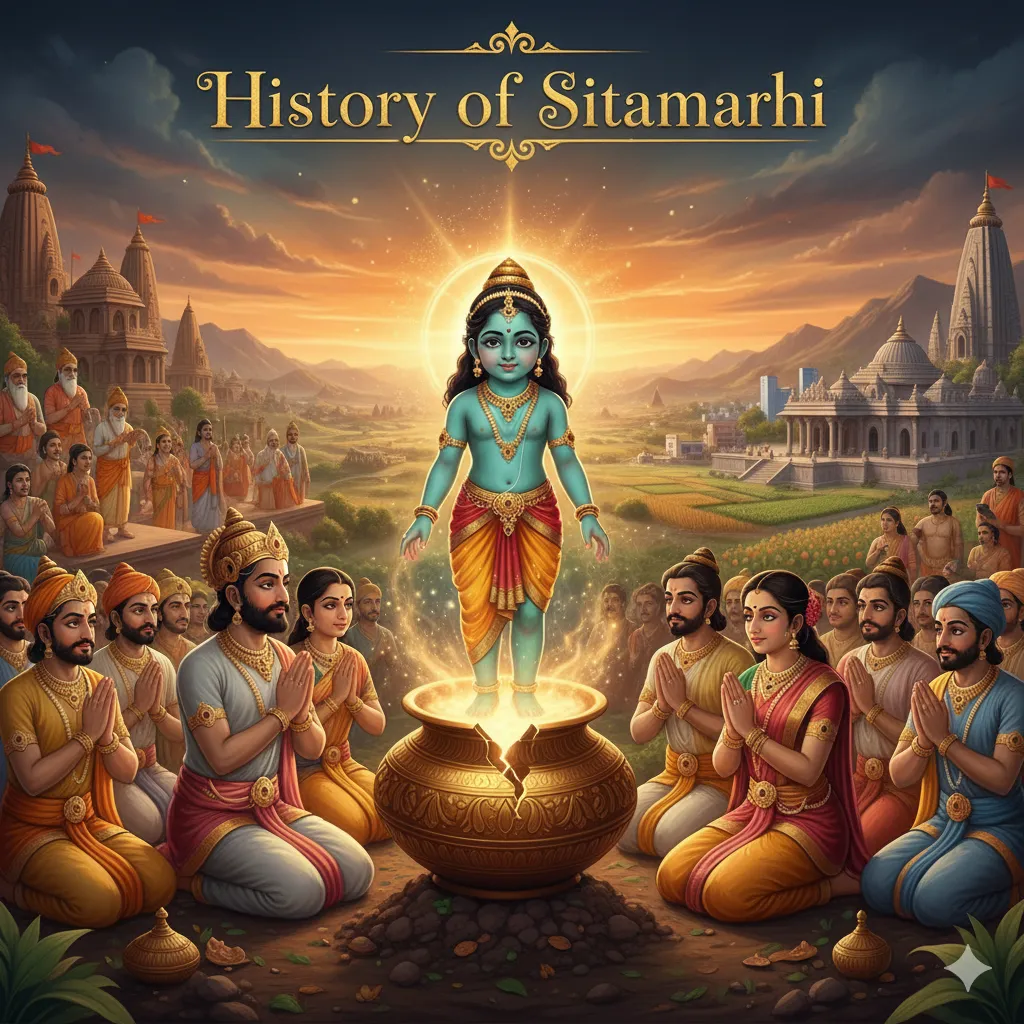
The legacy of Sita is woven into the very fabric of local life. The cultural continuity of the region is preserved through the Bajjika culture revival. This distinct culture, with its rich folk traditions, is a living library of the past. Ramayana-themed dances, known as “Ram-Leela,” and oral storytelling are passed down from one generation to the next, ensuring that the epic’s lessons endure.
The Bajjika language, a local dialect of Hindi, serves as a powerful tool for preserving identity. In the homes of Sitamarhi, mothers and grandmothers still sing traditional songs that recount the tales of Sita’s childhood and marriage. These songs, often accompanied by simple percussion, are a form of cultural transmission, especially for women who have long been the keepers of tradition. The seasonal rhythms of Sitamarhi cultural festivals, from the vibrant colors of Holi to the solemnity of Chhath Puja, resonate with an emotional resonance that connects the people to their roots.
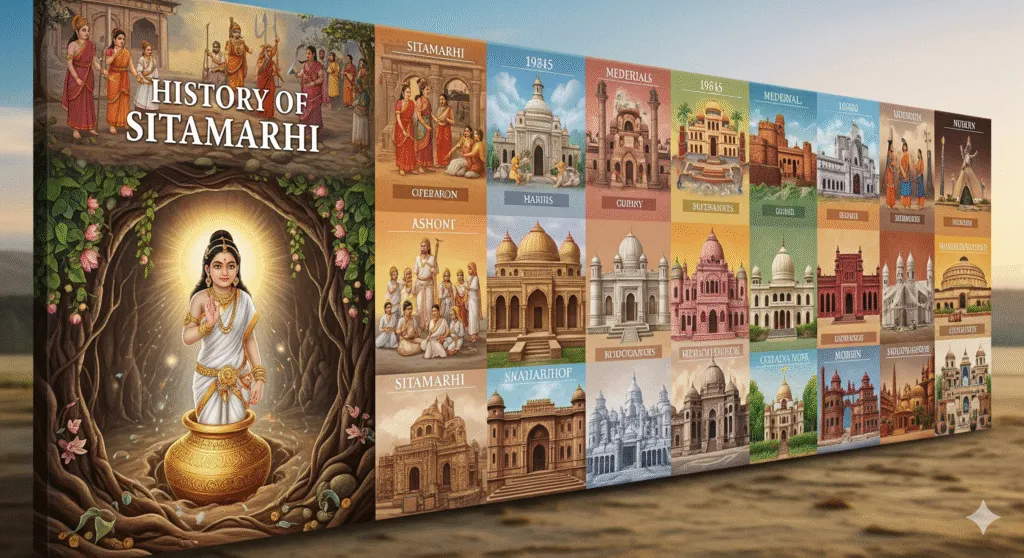
Section 4: Historical Layers — From Mauryan Echoes to Colonial Footprints
Beyond its mythological identity, Sitamarhi has a rich and multi-layered history. Archaeological insights from sites like Baghi Math Buddhist site reveal the region’s connection to ancient empires. Mauryan echoes can be found in unearthed artifacts, and the influence of Buddhism, Shaivism, and Vaishnavism across centuries speaks to the region’s long history as a crucible of diverse spiritual and philosophical ideas.
The district also bears the marks of Mughal and British rule. Under British administration, it was a part of Muzaffarpur subdivision and eventually gained its own district status in 1972. This period of colonial footprint brought with it significant administrative evolution, as well as trade, resistance, and social transformation. The town’s infrastructure and administrative systems were shaped by these historical forces, creating the framework for its modern identity.
Section 5: Sitamarhi Today — Tradition Meets Innovation
In recent years, Sitamarhi has seen a quiet revolution. While its roots remain firmly in tradition, the town is embracing innovation. The rise of digital entrepreneurship in Bihar has found a home here, with young creative pioneers carving a new path.
A prime example is Om Digital Lab Sitamarhi, a creative studio that has become a symbol of this modern transformation. They are not just focused on wedding photography Sitamarhi; they are blending visual storytelling with heritage preservation. By leveraging tools like SEO, branding, and ethical publishing, they are transforming local business into a vehicle for cultural empowerment. Through their lens, they tell stories of Sitamarhi’s history, its vibrant festivals, and the daily lives of its people, creating a digital narrative that resonates far beyond the district.
The youth movements in Sitamarhi are a testament to this spirit of progress. They are using technology to educate, to organize, and to build a better future, proving that small-town innovation is a powerful force.

Section 6: Vision for Tomorrow — Sitamarhi’s National Legacy
Sitamarhi’s journey is a blueprint for the future. It’s a vision for building a model of transparent, ethical digital business that honors its past while embracing progress. The goal is to empower a new generation of creators through mentorship and storytelling, transforming Sitamarhi into a cultural capital of the Ramayana in Bihar.